June 13, 2016

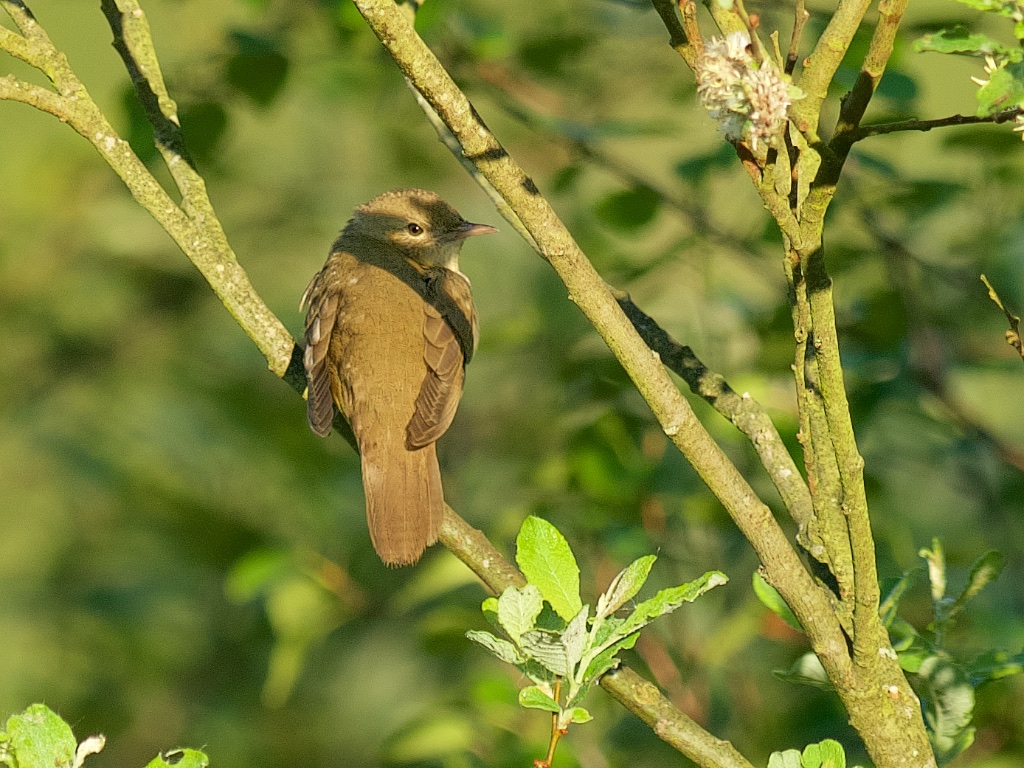
Locustella fluviatilis

No: Elvesanger, En: River warbler, It: Locustella di fiume, Sci: Locustella fluviatilis

Dear All,
A recurrent theme this year is rare birds in Hordaland. This Elvesanger  has been heard at night for about a week in the island of Radøy north of Bergen. It is years between every time we hear this particular warbler in Hordaland. Thanks to Harald Totland for arranging the excursion.

Check out my YouTube video (hear it singing)!

Best,
Hans

River warbler, Radøy, Hordaland, June 13, 2016


February 29, 2016

Emberiza pusilla

No: Dvergspurv, Eng: Little bunting, It: Zigolo minore, Sci: Emberiza pusilla


Dear All,
Happy leap-year! This winter has been incredible in our county Hordaland, with many very rare visitors. 
You will see some of them in the next months.
The little bunting lives in the Taiga of Siberia and normally migrates to north India and China. 
This one has stayed much of January and February in the same garden as the Oriental Turtle Dove of my December post!

Best,
Hans


Fana, Hordaland, January 2016

January 06, 2016

Alcedo atthis

No: Isfugl, Eng: Common kingfisher, It: Martin pescatore


Dear All,  Happy New year!

The bird of January is well known in England and Italy, but rare in Norway. This male has been visiting a salmon river at Osterøy near Bergen the last two winters. It seems to live well! The salmon in the last photo was too large to be swallowed, so it threw it away and went to get a smaller lunchpack. It is amazing how the color changes from green to blue depending on the light.

Thanks to Paola Zanna and Harald Totland for joining excursions to Osterøy twice.

-Hans

Osterøy, Hordaland, January 2015


December 31, 2015

Streptopelia orientalis meena

No: Mongolturdeldue, Eng: Oriental turtle dove, It: Tortora orientale


Dear All,
A very rare bird for the last post of the year. The Oriental Turtle Dove has only been seen around 20 times in Norway for the last 100 years.
This one has been around a garden near Bergen for the christmas week. It belongs to central Asia, but has 
evidently navigated wrong. It is very similar to the ‘standard’ Turtle dove, but quite a bit larger.

Thanks to Harald and Talina for joining in the excursion!

Best wishes for the New Year!
Hans

Fana, Hordaland, December 2015. 


November 30, 2015

Fulica atra

No: Sothøne, Eng: Eurasian coot, It: Folaga comune

Dear All,
A common bird (in our neighbourhood) for November. Actually it is on the Norwegian “redlist”, grade “VULNERABLE”, with a total of less than 1000 nesting birds in Norway. The photographic challenge is the red eye and the high contrast between white and black.

Best,
Hans


Sothøne, Tveitevannet Bergen, 4. november 2015.


October 31, 2015

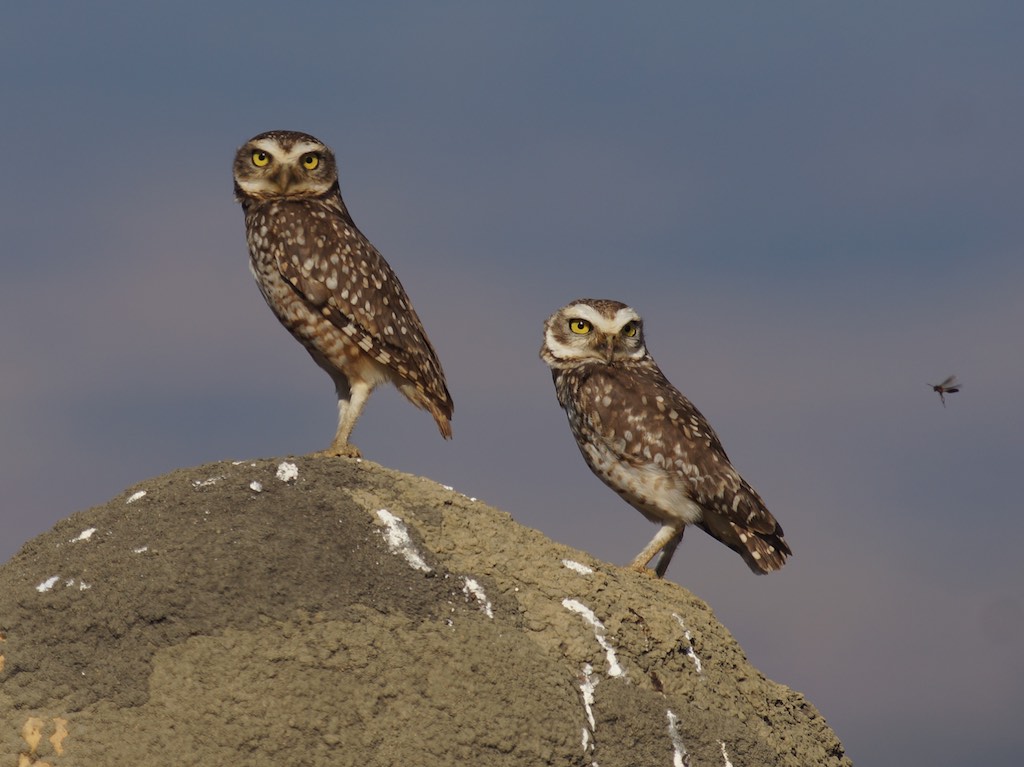
Athene cunicularia grallaria

No: Brasiliansk graveugle, Eng: Brazilian Burrowing Owl

Dear All,
One more from Brazil for October. 

Best,
-Hans

Serra da Canastra, Minas Gerais, Brazil, September 2015


September 30, 2015

Galbula ruficauda

No: Rusthalejakamar Eng: Rufous-tailed Jacamar

Dear All, 
Brazil - fantastic. I could continue for several years just with my Brazilian photos … 
Brazil has 1901 _known_ species (new appear regularly), compared e.g. to Australia 898, 
Italy 527 and Norway 473.

This Jacamar was seen in the wood behind University of Sao Carlos (State of Sao Paulo).
Length (including tail and beak): 22cm. Eats: insects, butterflies etc, see last photo.

Best,
Hans

Sao Carlos, Brazil,  September 2015

August 31, 2015

Circaetus gallicus

No: Slangeørn, Eng: Short-toed eagle, It: Biancone

Dear All, 
The August picture is from the highlands of inner Puglia, Italy, the Murge,
a beautiful natural park with a large variety of (to me) exotic birds.
A special thanks to Peppino Carlucci who showed me around!

Next month a bird from Brazil!

-Hans

Murge, Puglia, August 2015


July 31, 2015

Merops apiaster

No: Bieter, Eng: Bee-eater, It: Gruccione

Dear All,
For July, I have selected this very colourful bird. It is occasionally seen in Norway, e.g. in June a group of 10 visited Hordaland. But these photos are from Extremadura, Spain,
where Harald T. and myself saw them on May 31. They do also eat flies (last photo).

I wish you all a nice summer.

-Hans

Extremadura, June 2015


June 30, 2015

Falco naumanni

No: Rødfalk, Eng: Lesser kestrel, It: Grillaio


Dear All,
This is from Harald and my trip to Extremadura, three days in May/June.
Altogether we saw about 85 different species, many of them new to me.

The Lesser Kestrel lives in the cities, as these in the church tower in a small village.
First the female, then the male.

It is common folklore that you cannot shoot birds in action with a manual focus lens. Hereby disproven.

-Hans


May 31, 2015

Sylvia curruca

No: Møller, Eng: Lesser whitethroat, It: Bigiarella, Sci: Sylvia curruca


Dear All,
A couple of weeks ago, Harald Totland said: “Wouldn’t it be cool to see a MØLLER in (our street) Møllevegen?”  This bird is not common, in average seen in Bergen about once every year. Then the morning on the 13. of May, Harald spotted it sitting in a tree in our garden! This destroyed my morning, trying to get a photo, unsuccessfully. Fortunately, it stayed in the area for at least a week.

The photo is from our neighbourhood on May 18.

Enjoy!
-Hans


April 30, 2015

Ardea alba

No: Egretthegre, En: Great egret, It: L’airone bianco maggiore

Dear All,
In this month of April 2015, the EGRETTHEGRE (Great Egret) has been observed both in Hordaland (Bømlo) and near Skien (Børsesjø). It is rarely seen in Norway.

My picture is from Iguazu Falls, Argentina, from christmas eve 2014.

Enjoy.

Best,
Hans

Iguazu falls, Argentina, Dec. 24, 2014.

March 31, 2015

Sturnus vulgaris

No: Stær, En: Starling, It: Storno

Dear All,
This photo of a starling from my garden was selected Bird photo of the year in Hordaland.

Hans.

Storetveit April 10, 2014

February 17, 2015

Otis tarda

No: Stortrappe, En: Great bustard, It: Otarda

Dear All,
I spent St. Valentines day 2015 alone in Extremadura, Spain watching the mating lek of the
Great Bustard! (How romantic …). All together there were more than 30 birds in the field. This is a very big bird. The male weighs up to 16 kg, wingspan up to 240cm. It can fly, see bottom picture. The great bustard is almost extinct in all of Europe, except Spain. In Norway it has only been seen once, in 1761, described in a letter from Bishop Gunnerus to Carl von Linné.

The males utter the most amazing sound during the mating game. Hear it in BBC Tweet of the Day.

If you want to visit Extremadura, I highly recommend Casa Rural el Recuerdo.

Hasta el próximo mes,
Hans.


January 07, 2015

Somateria spectabilis

No: Praktærfugl, En: King eider, It: Re degli eredoni

Dear All,
New year! We have enjoyed a KING EIDER - PRAKTÆRFUGL here in Hordaland this month. On January 7, instead of going to work, I drove up to Salhus north of Bergen to ‘get it’.

It is a remarkable sight to watch a flock of more than 700 Eiders (Ærfugl) diving for mussels. And among these one a single KING EIDER! King eiders are inhabitants of the far north (Finnmark, Spitsbergen, Siberia). Occasionally they appear on our latitudes. Last time in Hordaland was in 2009. They are also seen near Jomfruland (Bamble, Telemark) perhaps once every 5-6 years or so. And, on the coast of Scotland one or two are seen every year, so keep eyes open in Morar!

This bird is a male, about 3 years old. When they grow older they develop a characteristic ‘blub’ on the beak. (“Conspicuous head”). On this bird it is barely visible, so older birds are perhaps even more impressive. Still, I choose this as  the first bird of 2015. 

Best regards,
Hans

Added January 2016:
It is back again this winter! Some pictures below.

Salhus, Jan. 2015
Nygårdsviken, Gravdal, January 2016 
Nygårdsviken, Gravdal, January 2016

Nygårdsviken, Gravdal, January 2016

December 31, 2014

Ramphastos toco

No: Tocotukan, En: Toco toucan, It: Toco toucan

Dear All,
Uruguay and Argentina have been fantastic. We had many candidates for BotM-December. Today we went for our second day in the rainforest around Iguazu falls. We didn't have much hope of seeing the Toucan, since it is not easily seen, and we have been here for two days without any sign of it. Then, on christmas eve, last evening here, not long before sunset they appeared in front of us for a few minutes, not one but two Tucans! So this is the obvious choice. The Tucan looks unreal! It is really beautiful when it flies.

Thanks for help Paola! I dedicate these photos to Aurora, she is so fond of this bird.
A nice christmas for everyone!


-Hans


November 30, 2014

Sitta europaea

No: Spettmeis, Eng: Nuthatch, Sci: Sitta europaea, It: Picchio muratore


Dear All,
Enjoy the Nuthatch (Spettmeis), one of the cutest among the common garden birds.

Next month: Hopefully something exotic from South America. We go to Uruguay for conference + christmas holiday on Dec. 9.

To those I don’t see before we return: Merry Christmas!

-Hans


October 31, 2014

Mergus serrator

No: Siland, En: Red-breasted Merganser, It: Smergo minore

Dear All, 
I went to Herdla island outside Bergen in the end of October. All vaders were gone, but there were many different ducks and geese. However, for aestetic reasons the main photo of the month is the Merganser in breeding plumage from Loch Morar in April. Compare with the eclipse plumage of October at Herdla (last photo).

Best,
Hans

Breeding plumage, Loch Morar Scotland, April 2014


Mrs. and Mr. Merganser

Eclipse plumage Herdla, Norway, October 2014